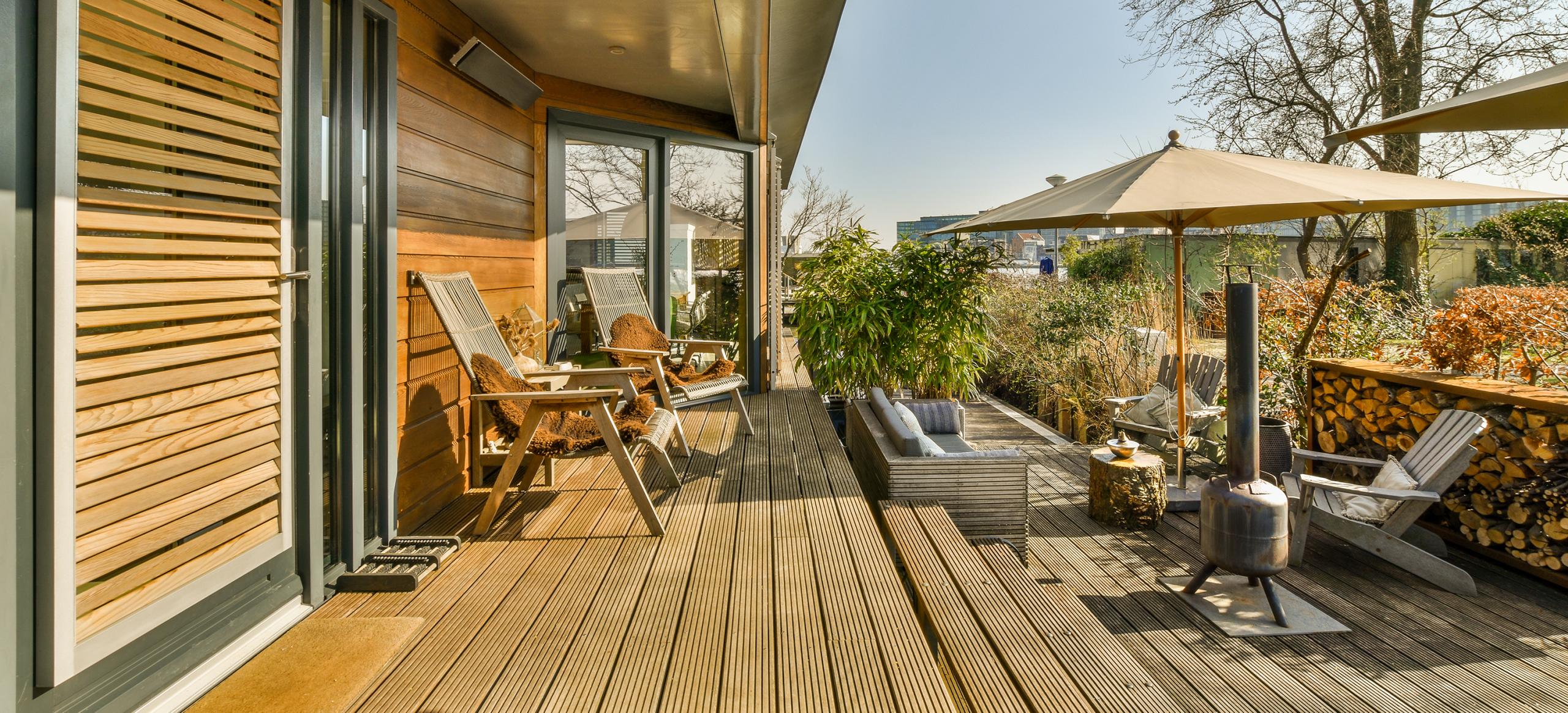
A new deck sounds simple on paper. A few boards, some rails, a set of stairs, and you are out there grilling by the weekend. However, in real life, the “right” deck comes down to structure, layout, how your yard drains, where your doors land, how you plan to use the space, and what you want to maintain for the next 10 to 20 years.
At T&H Construction, we build decks all over Middle Tennessee. The pattern is pretty consistent: homeowners usually start with a look they like, then we back into the design that actually works with the home, the grade, and the budget. So let’s walk through the main deck types, what they are best at, and how to figure out which one fits your lifestyle without overbuilding or cutting corners.
Start with how you actually live out there
Before we talk about materials or shapes, we always come back to function. If you are mostly outside for dinner and a little lounging, you need a different deck than someone hosting big groups every other weekend. Same thing if you have kids flying in and out, dogs, a hot tub, or you want a covered area with a TV and ceiling fan.
A few practical questions we talk through on site:
- Where do you naturally exit the house, and where do you wish you could?
- Do you want sun all day, shade, or a mix?
- Are you okay with seasonal maintenance, or do you want to wash it and forget it?
- Do you need stairs to a patio, a backyard path, or a driveway side gate?
- Is privacy an issue with neighbors or a busy road?
Once we know those answers, deck type decisions get easier, and the final design feels intentional, not random.
And speaking of deck types and associated requirements, let us mention another important detail in creating the ideal outdoor space – the choice of roofing material. For example, installing a standing seam metal roof will ensure high durability and low maintenance costs. Just one more aspect you should consider when designing the perfect outdoor space.
Ground-level decks: simple, clean, and underrated
Ground level decks sit close to grade, usually within a step or so of the yard. These are a great fit for single-story homes, walkouts that are already low, or backyards where you want the deck to feel like an extension of the lawn instead of something perched above it.
The big win here is accessibility and cost. Fewer stairs, less railing in many cases, and a simpler structural system. But it is “no big deal” structurally. With low decks, moisture and airflow matter a lot. If we are too close to the soil or we do not plan drainage well, that deck can stay damp and shorten its lifespan.
Ground level decks have special engineering features we focus our efforts on while building them – namely, ground clearance, good ventilation, proper flashing at the house, drainage after the rain, etc. That is when precision engineering and disciplined project management matter most, since the quality of your deck is determined by what cannot be seen.
Elevated decks: the classic choice for views and walkout living
Elevated decks are what most people picture, especially on homes with back doors higher off the yard, or properties with a slope. This style gives you a better view, a more open feel, and room underneath that can sometimes be used for storage or even a future patio.
Elevated decks also come with more structural demands. Posts, beams, joist sizing, and connections need to be right because you are building a platform people will gather on. If you plan to add a hot tub, outdoor kitchen, or a roof later, we want to design for that up front. Retrofitting a structure after the fact can get expensive fast.
And then there is railing. Railing is not just “pick a style.” Railing affects safety, code compliance, wind feel, and even how big the deck looks from the yard. We help homeowners choose options that look good and still feel sturdy, not shaky or underbuilt.
Wraparound decks: big curb appeal, big planning requirements
The wraparound deck design is effective in enlarging the space, giving it several entry and exit points, and solving an age-old problem of yours: on one hand, you need some place with a canopy for the afternoon and open space for the morning; on the other hand, you do not want to compromise.
That said, wraparound designs need thoughtful planning. They add square footage quickly, which impacts budget and permitting. They also involve more transitions, corners, and sometimes multiple sets of stairs. If we do it right, it looks seamless. If we rush it, it can look like three separate decks stitched together.
When a homeowner wants wraparound, we like to step back and map out the traffic flow. Where will people congregate? Where will furniture actually fit without blocking walkways? Where should the grill go so that the smoke does not roll into the house every time you cook? Those small decisions are what make the deck feel “easy” to live with.
Multi-level decks: when your yard and home do not match heights
Multi level decks are perfect when the back door sits high, but you want a lower “hangout zone” closer to the yard. You can do a dining level up top, then steps down to a lounge level, fire pit area, or even a landing that leads to a patio.
This design can feel high end, but it is not just about looks. Multi level decks help solve elevation changes without forcing one long staircase. They also create natural zones, which is great for entertaining. Kids can be down low, adults can be up top, and you still feel connected.
The main thing to watch is complexity. More levels means more framing, more railing, more stairs, more lighting, and more labor. It is worth it when the layout truly fits the property. If the yard is flat, we usually can get the same lifestyle benefit with a simpler plan.
Covered decks and screened decks: comfort that stretches the season
A covered deck changes everything. Shade, rain protection, and a space that feels like an outdoor room instead of just a platform. Screened decks add another layer of comfort, especially in Tennessee summers when bugs can make evenings less enjoyable.
If you are thinking about a roof, we should talk about it early. A cover is not just “add posts and a little roof.” It needs proper footings, load paths, tie-ins, and a plan for water runoff. If you want electrical, fans, heaters, or lighting, we coordinate those details so they look clean and function reliably.
This is also where project management matters. Covered decks have more trades involved, more scheduling, and more inspection points. We keep the process organized, because a beautifully finished ceiling is not much comfort if the timeline drags out.
Freestanding decks: flexibility when the house connection is tricky
The freestanding deck is built separately, without any ledger attached to the house, and supported only by its own posts and beams. This type of construction is recommended if the exterior surface of your house requires a special approach and/or if you wish to create an additional deck at some distance from the house, say, by the swimming pool or a detached garage.
A freestanding design still needs solid engineering. The deck has to resist movement and feel stable underfoot. We also want to think about the transition from the house to the deck. Sometimes that is a short set of steps, sometimes a landing, sometimes a walkway that ties everything together.
If you are dealing with older siding, masonry, or uncertainty about the framing inside the wall, freestanding can be a clean solution that avoids risk.
Materials: wood vs composite, and what maintenance really looks like
A lot of homeowners ask for the “best” decking material, and we get it. You do not want to rebuild this thing in eight years. The truth is that each option has tradeoffs.
Pressure-treated wood is budget-friendly and can look great, especially when it is done with clean lines and quality fasteners. But it will move, it will check and crack over time, and it needs periodic maintenance if you want it looking sharp.
Composite decking costs more upfront, but it buys you lower maintenance and long term consistency. It is popular for families who want to enjoy the deck more than they want to maintain it. You still need good structure underneath, proper ventilation, and clean installs, because composite will not hide framing mistakes.
In most builds, we can tailor the plan so you get durability where it matters most, and smart cost control where it does not.
A quick way to match deck type to lifestyle
If you want a fast gut check, this is the simplest way our pros frame it:
- If you want easy access and a casual vibe, ground level or low platform.
- If you want views and a true extension of your main floor, elevated, sometimes with a patio below.
- If you entertain often or want “zones”: multi level or wraparound.
- If you want comfort in sun, rain, and bug season, covered or screened.
Then we refine it around your home’s structure, yard slope, and the features you care about most.
Let’s build the deck that fits your home, not just the trend
To feel as if a deck were always part of your home, you will need good engineering solutions and design skills. Our company offers you just that, providing you with engineering precision and disciplined project management in every project we take. We build great decks in Middle Tennessee, so feel free to call us at (615) 562-0847 if you are in need of T&H Construction in Middle Tennessee.