
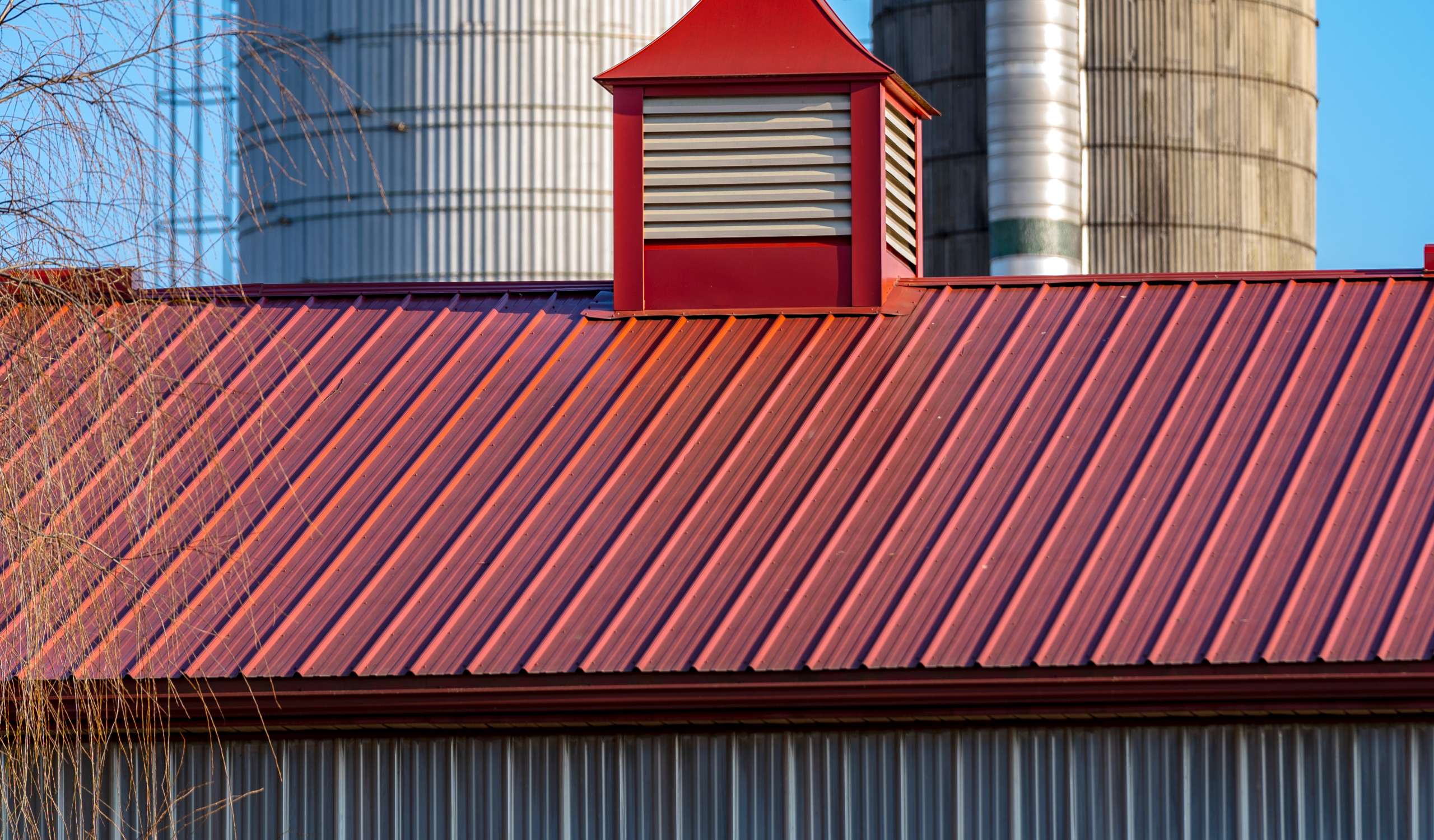
Standing seam has this reputation. Clean lines, no screws showing, the kind of roof that makes a building look finished and intentional. And yeah, a lot of the time it earns that reputation.
But “metal roofing” is a huge category, and standing seam is only one lane in it. We talk with business owners all the time who say, “I want a metal roof,” and what they’re picturing might be standing seam. The structure may contain a fastener panel system that uses visible fasteners to connect its components together, which is typical for agricultural structures.
The three metal roofing systems display different performance characteristics and different price points, and their materials experience different aging processes. T&H Construction uses a controlled conversation speed, which helps us determine the correct roofing material for our project requirements, building specifications, financial resources, and future development needs. Standing seam can be a great decision. It can also be overkill. And sometimes people end up with a “standing seam style” panel that looks right from the curb but doesn’t perform like a true engineered system.
So let’s get into it. Pros, cons, and the different types of standing seam panels, in plain language.
What standing seam actually is (and what it isn’t)
A true standing seam metal roof is a concealed fastener panel system. The panels exist as wide exposed areas that contain flat surfaces and feature vertical legs that extend upward from their boundary points. The legs create a locking mechanism that connects to the panel seam through hidden fasteners that use clips for attachment. The visible difference shows one main variation that remains invisible to viewers.
The metal roofing system uses screws, which appear on its surface as fasteners that connect the roof panels together. The fasteners create maintenance requirements because they penetrate through the surface, and the washers protect against UV light and weather conditions. Exposed fastener roofs can still be a solid choice for certain buildings, but they are not the same thing.
With a standing seam, you get a cleaner look, and you’re not creating thousands of penetrations through the face of the panel.
The real pros of standing seam (why people pay for it)
Standing seam usually costs more up front, so it needs to bring something real to the table. In our experience, it does, when it’s specified and installed correctly.
1) No exposed fasteners on the surface
This is the headline benefit. Fasteners aren’t sitting out in the sun and rain. You’re not relying on exposed washers for long-term waterproofing. You also avoid turning the panel face into a grid of holes.
2) Engineered performance is available
The best standing seam systems are engineered and tested to high standards. That matters if your building sees heavy wind, driving rain, or you’re trying to meet specific performance requirements for a commercial project.
3) Thermal movement is built into the system
Metal moves. Hot day, cold night, season to season. With standing seam, panels typically aren’t pinned the same way as exposed fastener systems are. Clips can allow expansion and contraction, and some systems use slider or expansion clips designed specifically to manage that movement.
This is one of those quiet benefits that shows up years later when a roof still lies flat and behaves the way it should.
4) Longevity and lower day-to-day maintenance
A well-built standing seam roof is a long-term roof. Compared to shingles or other systems with lots of exposed components, it’s generally less “check and re-check” year after year.
That doesn’t mean it’s maintenance-free. It just usually means fewer recurring issues like fastener back-out and washer deterioration.
5) It looks sharp on everything from small offices to large facilities
The modern appearance is real. Straight lines, crisp seams, and lots of color options. It works on mixed rooflines and buildings with multiple planes, which is common with commercial properties that have additions and phased expansions.
6) Energy efficiency options are strong
Many standing seam roofs are made with cool metal roofing coil. Reflective pigments and emissive properties can reduce heat gain, which can help with comfort and HVAC load. Not every building will see dramatic savings, but it’s a real advantage in Middle Tennessee summers.
7) Mounting options without roof penetrations
With the right seam type and the right hardware, we can often mount accessories without drilling through the roof surface. That’s a big deal for things like snow guards in some regions, and for certain solar mounting approaches. It’s not automatic on every panel profile, but standing seam gives us more options.
The honest cons (the stuff people don’t hear in the showroom)
Standing seam is not magic. It’s a system. And the system has trade-offs.
1) Higher cost
Standing seam is typically more expensive than other metal roofing types, especially exposed fastener panels. Labor is a big part of that. Materials can be, too, depending on gauge, finish, and the seam type.
If the building is a simple structure and the long-term expectations are modest, we’ll say it. Sometimes a different metal roof makes more financial sense.
2) Fewer qualified installers
This is a big one. Standing seam installation is more complex. Panel alignment, clip layout, seam details, flashing work, and sometimes mechanical seaming. If the installer isn’t experienced, the roof can look fine on day one and still be set up for long-term problems.
We’re disciplined about process because a roof is one of those things you don’t want to learn the hard way.
3) Labor intensity and jobsite coordination
Standing seam can involve on-site rollforming, moving long panels without damage, careful staging, and a more detailed install sequence. It’s not “slap it on and go.” That affects schedule and jobsite flow, especially on busy commercial sites.
4) Repairs can be tricky
Replacing one panel in the middle of a standing seam roof is not like swapping a shingle. Depending on the profile and seaming method, it can be difficult to remove and replace an individual panel without disturbing the surrounding panels.
5) Scratching and handling marks are a real risk
Standing seam panels are long, and they’re finished materials. If the crew isn’t careful, scratches can happen during staging, lifting, and installation. We plan for protection and smart handling, because cosmetic damage on a premium roof is frustrating.
6) Not for dead-flat roofs
Standing seam needs a slope. In general, it’s not suitable below about 0.5/12 because drainage becomes a problem. Some systems can go lower than others, but this is where details matter and where the wrong panel choice can cost you.
7) Insurance and hail expectations
Metal roofs provide effective protection against weather conditions, yet hail damage creates visual problems when panels possess certain material specifications. Metal roofing systems receive hail damage protection through some insurance policies, which include hail damage waivers for metal roofing systems. We always recommend reviewing that part of your policy before you commit, so there are no surprises.
The different types of standing seam panels (and why they matter)
This is where most confusion happens. The term “standing seam” describes multiple products that exist as a group of different profile designs. Panel widths exist between 12 inches and 18 inches, and 16 inches serves as the most common standard. Seam heights usually run from 1 inch to 3 inches, and we see 1.5 inches and 2 inches a lot. The right combination depends on the building, the slope, the environment, and expectations for watertightness.
Material thickness matters too. The common thickness of standing seam panels ranges from 22 gauge to 26 gauge, while 24 gauge Galvalume serves as the typical industry standard. Aluminum panels are often specified by thickness, like .032 to .040 inches. We match thickness to performance needs, not just price.
Now the profiles.
Snap-lock standing seam
Snap-lock panels snap together without hand or mechanical seaming. These are typically installed on roof pitches of 3/12 or greater. They attach using clips under the panel, which helps with thermal movement, and they’re generally less labor-intensive than mechanically seamed systems.
If you want the standing seam look and performance on a steeper roof and you don’t need a low-slope, super weather-tight seam, snap-lock can be a strong option.
Mechanical lock standing seam (single lock and double lock)
Mechanical lock systems are formed together, creating a tighter seam.
A single lock seam is typically a 90-degree fold. It can perform well in milder environments and on slopes that aren’t pushing the limits.
A double lock seam is a 180-degree fold, and it’s often the go-to for low-slope applications where you want extra protection against water intrusion. If we’re chasing maximum weathertightness, this is usually part of that conversation.
Mechanical seaming takes more labor and more precision, but it’s also where standing seam really starts to separate itself as a high-performance roof system.
Batten panel systems
Batten panels use two roll-formed legs that butt up next to each other, and then a metal cap covers that seam. Some versions are mechanically seamed into place, and others use snap-on caps.
Architecturally, batten panels can look great. But like any system, the details matter. We pay close attention to how the cap is secured, how transitions are handled, and what the manufacturer requires for slope and weather exposure.
Nail or fastener flange “standing seam.”
This is the one we spend a lot of time explaining to owners, because it can be marketed as a standing seam, and visually, it sort of is. These panels are directly fastened to the deck through a flange, and then the next panel snaps over to hide the fastener heads.
It’s usually cheaper, but it often lacks the engineering and performance you get from a true clip-based standing seam system. It can follow roof deck imperfections more readily, can be limited in panel length (often around 25 feet), and can be difficult to snap together cleanly. Over time, distortion can show up, especially if the panels were formed on equipment where the drive and forming rollers aren’t separate. And thermal movement is more constrained because the panel is more “pinned” to the deck.
We’re not saying it has no place. We’re saying it’s not the same product class, and if you’re paying for standing seam because you want long-term performance, this is where you want to slow down and be very clear about what you’re buying.
What about oil canning, striations, and that “wavy” look?
Oil canning is the visible waviness that can show up in the flat areas of metal panels. It’s mostly an aesthetic issue, not a structural failure, but it bothers people because the standing seam is supposed to look crisp.
One of the best ways to reduce the appearance is by using striations or stiffening ribs. There are different patterns and rib options, and we’ll recommend what fits the look you want while helping the panels install flatter and hide minor visual variation.
This is also where substrate quality and installation discipline matter. A roof deck with dips and waves can telegraph through certain panel types, especially fastener flange systems.
So, is standing seam worth it?
If you want a long-lasting roof with a clean finish, fewer exposed failure points, and the option for engineered performance, a standing seam is often worth it, especially on commercial buildings, offices, retail, and higher-end residential projects where curb appeal and lifecycle cost both matter.
But we also don’t treat standing seam like a default upgrade. The profile choice matters. The slope matters. The installer matters. And it’s easy to buy something that looks like a standing seam without getting the performance you thought you were paying for.
When we plan a standing seam project, we focus on the building as a system. Engineering precision, disciplined project management, and details that hold up in real weather. Not just what looks good in a sample board.
Ready to price it out and choose the right panel type?
If you’re considering standing seam for a building in Middle Tennessee, let’s talk it through and spec it correctly the first time. Call T&H Construction at (615) 562-0847, and we’ll walk your roof, discuss panel options and slope requirements, and put together a plan that fits your building and your long-term goals.

